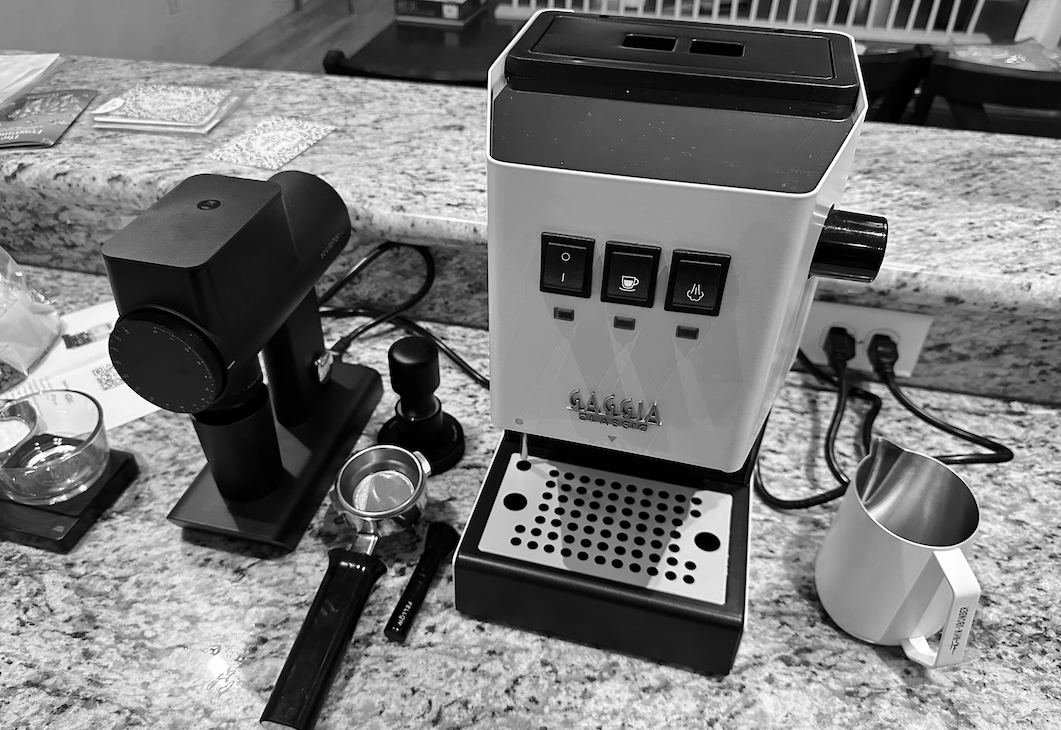
Coffee, communications, and working from home all go hand in hand. Not just as a metaphor (What Your Coffee Can Teach You About Communications) but also to fuel our creativity. This is why I continue to merge these two passions here on my website.
You see, I often refer to myself as a ‘reluctant coffee snob’. I spent nearly 16 years of my life in Australia, which established itself as a mecca for third-wave coffee. Simply put: Australia roasts and makes incredible coffee. Whether I wanted it or not, I was constantly provided with a great shot of espresso in many forms, which definitely made my taste buds turn a bit snobby.
Since moving back to America, and Hawaii more specifically, I’ve had to adjust. While I love a good batch brew, I found myself missing the specific cafe culture of Australia, the lattes and flat whites. So, I decided to step up my game and build a dedicated espresso bar in my office.
Here is the current setup that is keeping my wife and I missing Australia just a little bit less. I hope you find this helpful, and feel free to reach out with any questions.

Trade Coffee Subscription
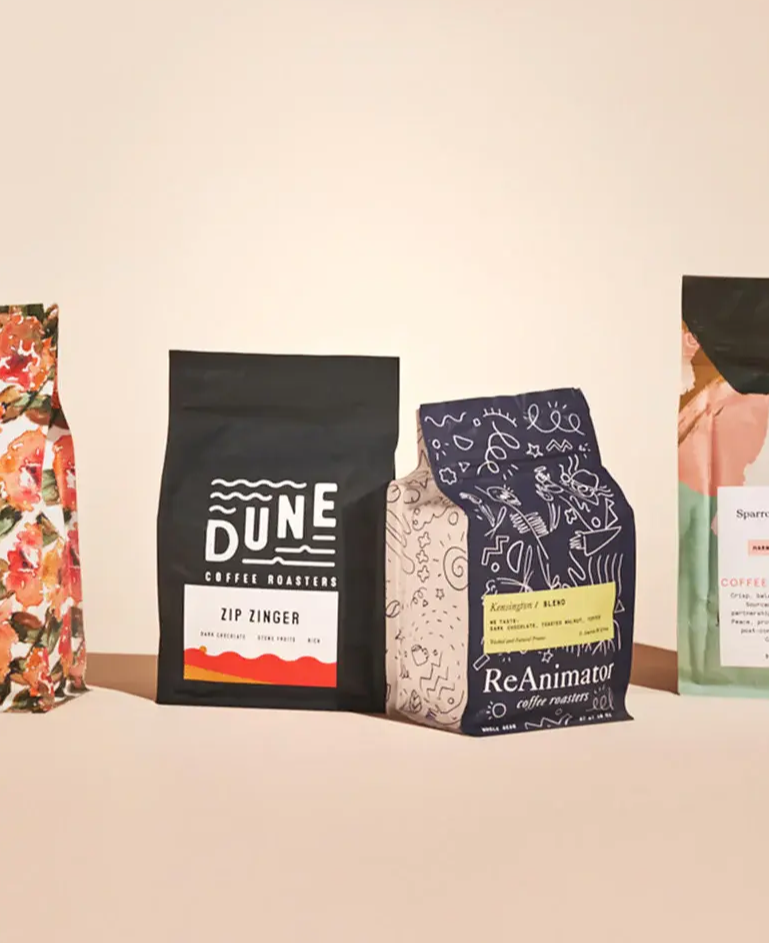
Ok I will start off by saying that if you do happen to live near a quality roaster then by all means go and support your local spot. Though the big factor here is all about being “freshly roasted”. If you picked up your coffee from a grocery store, and if it happens to have an expiry date on the package you have already made your investment in machinery pretty much useless. You may as well just get a $15 blade grinder and throw it in a French Press. Which is fine if that’s what you like. But if you are after quality then it starts with the beans. A basic rule of thumb is that you should wait at least 5 days after coffee is roasted to drink it. Then make sure to finish it in the first 2-4 weeks because it starts to go stale really quick. This is why any quality roaster will only sell you 12oz bags or smaller, sorry you won’t find those massive Costco bags that will last a few months. Ok so now to where I am currently getting our coffee. I tried a few different coffee subscriptions but have really liked Trade Coffee. I am a digital marketer so am always a sucker for a good advertisement showing up in my social feeds. That is how I first heard of Trade. It is a pretty simple concept, you just answer a few questions about your coffee drinking habits and they recommend a subscription. Though really you are choosing between Blends or Single Origins. The thing I really like is how they rotate sending you coffee from a bunch of different roasters around the country. The first coffee i got was actually a Rwandan Single Origin freshly roasted in Massachusetts. It was shipped for free all the way to Hawaii and arrived only a few days after it’s roasted on date!
Fellow Atmos Vacuum Canister
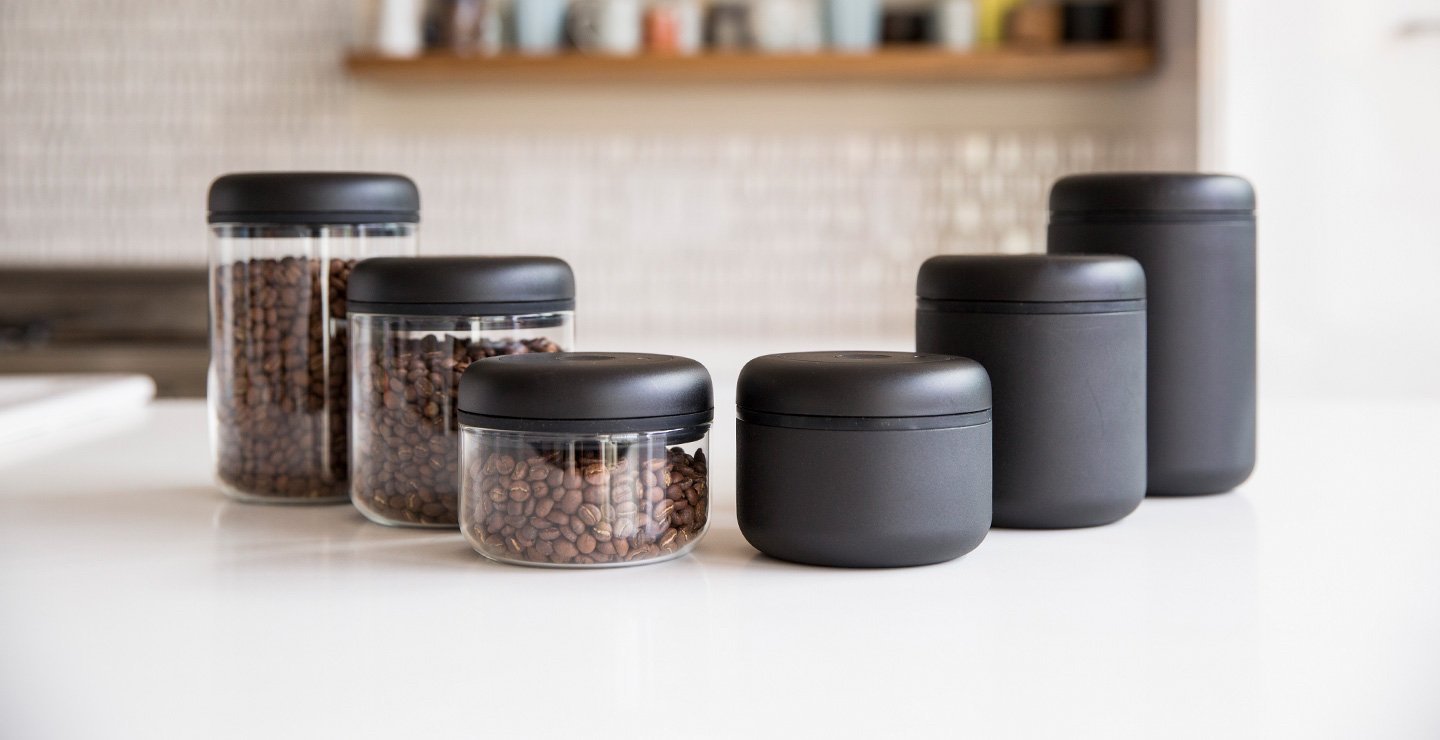
Investing in good beans only goes as far as the storage. So while you might have the best espresso machine and source of beans it won’t matter if stored incorrectly. Oxygen and sunlight are the two big killers so I went with the matte black Fellow Atmos Vacuum container. Seeing our subscription is two 12oz bags each time I went with the 1.2 Litre (not as big as they seem) which roughly holds a bag and a half. So I unload the first bag into the container and tuck the second unopened bag into a kitchen cabinet, no not the refrigerator or freezer. After a few days I can unload the second bag into the container. I love the look of these containers and not only does it provide a good seal but it allows you to literally suck the oxygen out, keeping your beans fresher longer.
CLICK TO CHECK IT OUT ON AMAZON NOW
I'm glad you made it this far into the page and I hope this overview of my setup was helpful to you.
Whether you're a reluctant snob like myself, or just trying to cut back on those pricey cafe runs, investing in a quality espresso setup is, surprisingly, a financially sound decision. Although the upfront cost of a machine and grinder seems high, you are probably spending more on daily lattes than you realize. Between the gas to get there and the $7 price tag, it adds up fast.
To make it more affordable, I recommend hunting for open-box returns. I saved a significant amount on my gear by watching Amazon Warehouse deals. I also sold some random office equipment I wasn't using on Facebook Marketplace to help fund the grinder.
I appreciate you taking the time to read this post. If you've got the gear but need the beans, click the button below for a discount on my favorite roasters.