I independently research and test products to help you make the best choice. As an Amazon Associate I earn from qualifying purchases at no extra cost to you.
If you're...


For years, my morning ritual was simple: drip coffee.
I had my routine down. I had my favorite beans, my ratio, and my trusty Moccamaster (which I still highly recommend, by the way). It was consistent, it was comforting, and it got the job done. But eventually, I started getting curious about what lay beyond drip. I wanted to make the kind of cup I'd get at our local coffee shops, right at home.
When I finally decided to explore home espresso, I was immediately overwhelmed. I Googled "best espresso machine," and suddenly I was reading about dual boilers, PIDs, and pressure profiling. It felt like I needed an engineering degree, and a second mortgage, just to make a morning latte.
I didn't want a giant chrome robot taking over my kitchen. I just wanted something simple, well-built, and capable of making genuinely good espresso without bankrupting me.
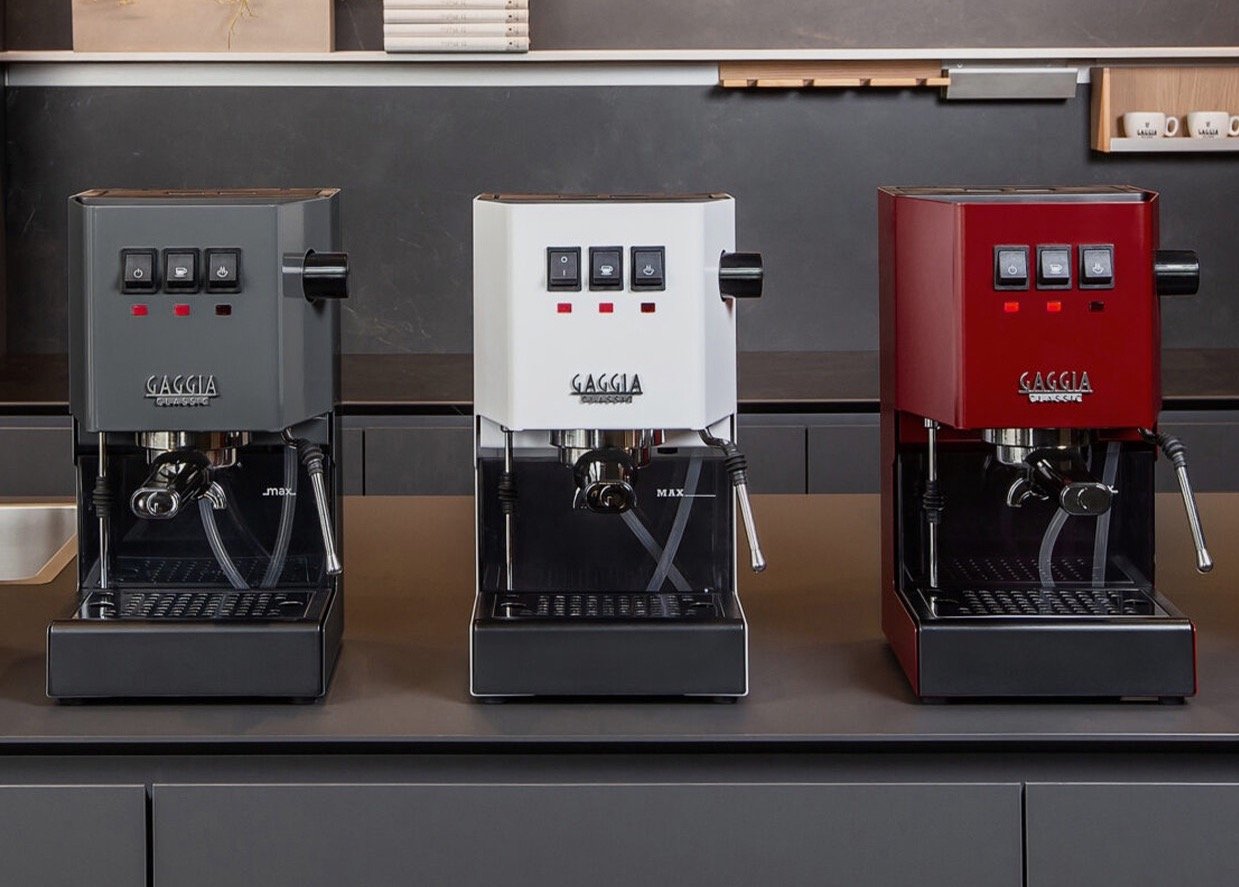
That's when I found the Gaggia Classic Pro. And honestly? It changed everything about my mornings.
TL;DR: The Gaggia Classic Pro ($499) is the best espresso machine for home use if you're starting out. It uses a commercial-grade 58mm portafilter, saves you over $1,000 per year vs. daily coffee shop visits, and, most importantly, its affordable price lets you invest in the grinder that actually determines your espresso quality.
The home espresso machine market is growing at roughly 5.9% per year, expected to reach nearly $4.9 billion by 2032 (Intel Market Research, 2025). I'm clearly not the only drip-coffee drinker who got curious.
My journey into espresso started with a simple craving: I wanted that richer, more concentrated flavor without driving to a cafe every morning. Drip coffee is great, I still drink it, but espresso opened up lattes, cappuccinos, and a whole new world of flavor I couldn't access with a pour-over.
The problem? The entry point felt impossibly complicated. Every forum post assumed I already knew what "pre-infusion" meant. Every YouTube video featured a $3,000 setup. I just wanted someone to tell me what to buy as a normal person with a normal budget.
The Gaggia Classic Pro earns a 4.5/5 rating across major review sites, with its value score hitting 9 out of 10 (Home Grounds, 2025). It's earned near-legendary status among home baristas, and once I started using it, I understood why.
Coming from a simple drip setup, the Gaggia felt like the perfect next step without jumping into the deep end of professional gear. Here's what sold me:
I didn't want to just push a plastic button. I wanted to learn. Flipping the heavy industrial switches on the Gaggia feels satisfying. Locking the portafilter into place feels real. There's a physicality to the process that makes the morning ritual more intentional.
I don't have a massive kitchen. The Gaggia is surprisingly slim, tucking right under my cabinets without dominating the counter. If you're working with limited space, especially a home office setup — this matters more than you'd think.
At around $499, the Gaggia Classic Pro is significantly more affordable than the massive all-in-one appliances you see in department stores. Check the latest price here.
And because the machine itself was affordable, it allowed me to do the most important thing you can do when building a home espresso setup: invest in the grinder.
According to the Specialty Coffee Association, optimal espresso extraction falls between 18% and 22%, and grind consistency is the single biggest variable that determines whether you hit that window. The machine pushes the water, but the grinder makes the flavor.
This was the biggest lesson I learned transitioning from drip coffee. If you buy an expensive all-in-one machine, you're often paying for a mediocre built-in grinder that you can't upgrade. Your espresso quality hits a ceiling, and there's nothing you can do about it.
Why does the grinder matter so much? When particles are uneven, some big, some tiny, water over-extracts the small pieces (pulling harsh, bitter compounds) and under-extracts the large ones (leaving sour, acidic flavors). No machine, no matter how expensive, can fix a bad grind. The grinder sets your quality ceiling. The machine just helps you reach it.
Because the Gaggia is so reasonably priced, I had budget left over to buy a dedicated, high-quality grinder. I loved my Fellow Ode 2 for drip, but it's purpose-built for everything except espresso. For espresso, you need a burr grinder that can shave beans into perfectly consistent, fine particles.
I paired my Gaggia with the TIMEMORE Sculptor 064S, and the difference is night and day.
Since I saved money on the espresso machine, I didn't feel guilty spending more here. The Sculptor is quiet, looks modern next to the retro Gaggia, and, most importantly, gives me that consistent grind that makes espresso taste like melted chocolate rather than hot, bitter water.
Could you start with a cheaper grinder? Sure. But from what I've seen, skimping on the grinder is the number-one regret new home baristas have. You'll end up upgrading within six months anyway. Better to do it right the first time.
The beauty of this pairing is that the total cost , machine plus grinder, still comes in well under what you'd pay for a single premium all-in-one machine. And the espresso quality? Not even close. The dedicated setup wins every time.
A daily coffee shop latte runs about $5. Make that same drink at home and it costs roughly $1.50 — a savings of $3.50 per cup. Over a year, that's over $1,200 you're keeping in your pocket (Whole Latte Love).
The Gaggia Classic Pro plus a quality grinder will run you somewhere between $800 and $1,100 total. At one drink per day, your setup pays for itself in about 8 to 10 months. After that, you're saving real money every single morning.
I won't pretend I never go to coffee shops anymore, I still love the atmosphere. But my daily driver? That's the Gaggia. And my wallet has definitely noticed the difference.
Here's what my morning actually looks like now:
The whole process takes under five minutes. Is it more involved than pushing a button on a Nespresso? Yes. But that's the point. The ritual is part of what makes it enjoyable. And the espresso tastes worlds better than any pod machine I've tried.
If you're looking for the best espresso machine for home use, don't get distracted by machines with a thousand features and a price tag to match.
Get the Gaggia Classic Pro. It's humble, it's built like a tank, and it leaves you enough cash to buy the grinder that will actually make your coffee taste amazing. Pair it with a quality grinder like the TIMEMORE Sculptor 064S, and you'll be pulling shots that rival your local cafe — for a fraction of the daily cost.
CHECK OUT MY FULL ESPRESSO SETUP
Start simple. Invest smart. Your mornings will thank you.

The Gaggia Classic Pro is widely considered the best entry-level espresso machine for home use. It features a commercial-grade 58mm portafilter, earns a 4.5/5 rating across major review sites (Home Grounds), and costs around $499, leaving budget for a quality grinder.
The grinder controls extraction consistency. The Specialty Coffee Association recommends an 18–22% extraction yield for balanced espresso, and grind uniformity is the primary factor determining whether you hit that target. An expensive machine cannot fix an inconsistent grind.
The average home barista saves over $1,000 per year compared to daily coffee shop visits (Whole Latte Love). A home espresso setup typically pays for itself in 8 to 12 months, depending on your daily consumption.
The TIMEMORE Sculptor 064S is an excellent pairing. It produces the fine, consistent grind espresso requires and keeps the total setup cost well under what you'd spend on a single premium all-in-one machine.
Yes. The Gaggia Classic Pro continues to earn top ratings as one of the best machines under $500. Its commercial-grade components, mod-friendly design, and proven durability make it a machine you can learn on and upgrade around for years (Home Grounds, 2025).
Disclosure: This post contains affiliate links. If you buy something through them, I may earn a small commission, at no extra cost to you. It helps fuel the coffee, the testing, and the writing. Thanks for supporting the work. I also only recommend products I have purchased using my own money, actually use, and truly believe in.
I independently research and test products to help you make the best choice. As an Amazon Associate I earn from qualifying purchases at no extra cost to you.
If you're...

Living in Hawaii, I have a complicated relationship with hot coffee. I love the ritual of a warm cup in the early morning but it doesnt take long for the sun to heat...