Daniel Norris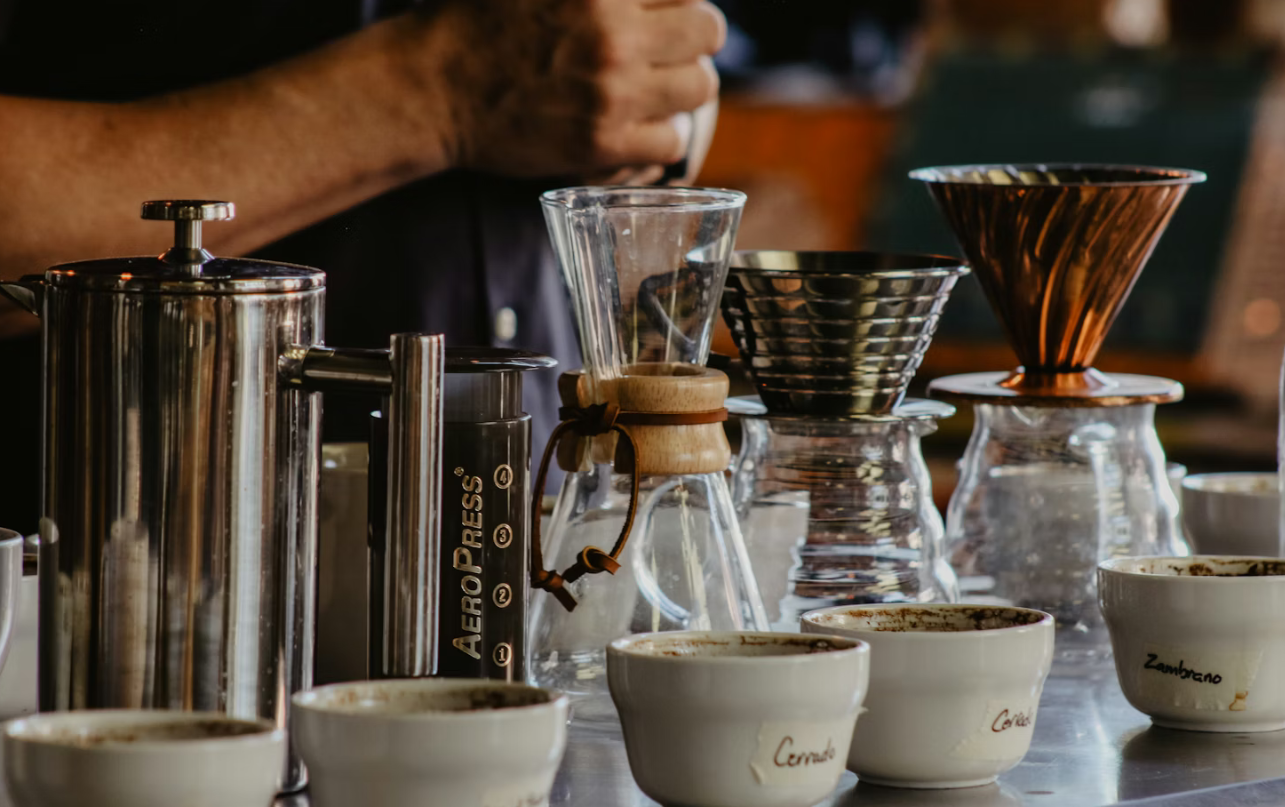
I independently research and test products to help you make the best choice. As an Amazon Associate I earn from qualifying purchases at no extra cost to you.
The AeroPress and the pour over sit on opposite ends of the manual brewing spectrum, and people have strong feelings about both. I've spent real time with each method, and while the AeroPress is clever and convenient, pour over wins for me every time. Here's why.
If you're trying to figure out which one deserves counter space, the short answer is this: the AeroPress is great for travel and speed, but a Hario Glass V60 pour over setup gives you a cleaner, more nuanced cup with more control over the process.
What Makes Pour Over Different
Pour over is a percolation method. Hot water passes through a bed of ground coffee and a paper filter, extracting flavor on the way down. The result is a clean, bright cup where you can actually taste the origin characteristics of the bean. Fruity Ethiopian? Chocolatey Colombian? Pour over lets those flavors come through without muddiness.
The AeroPress uses immersion brewing combined with pressure. You steep the grounds in water, then push the brew through a filter using a plunger. It produces a concentrated, slightly thicker cup. Some people love that body. I find it masks the subtleties I'm looking for in good single-origin coffee.
Why I Prefer Pour Over
Living in Hawaii, I drink coffee every morning. It's part of the routine, and I want that cup to be worth the effort. Pour over gives me that. The process is meditative, the cup is clean, and I can dial in exactly how it tastes by adjusting my grind, water temperature, and pour speed.
With the AeroPress, everything happens fast. That's its selling point, and I respect it. But fast and precise don't always go together. I found myself getting inconsistent results depending on how quickly I pressed the plunger, how long I steeped, and how fine the grind was. Too many variables in a small window of time.
Pour over slows things down. You control the water flow. You watch the bloom. You adjust mid-brew if the drawdown looks too fast or too slow. It's not complicated once you get the hang of it, but it gives you more levers to pull.
Where the AeroPress Wins
I'll give the AeroPress full credit for portability. It's practically indestructible, lightweight, and brews a decent cup in about two minutes. If I'm traveling or camping, the AeroPress comes with me. No question.
It's also more forgiving than pour over. If your grind is slightly off or your water temp isn't perfect, the AeroPress still produces something drinkable. Pour over punishes sloppy technique more, which can be frustrating when you're just starting out.
The Gear You Need for Each
Here's where pour over gets a little more involved. You'll want a gooseneck kettle for controlled pouring. The Fellow Stagg Kettle is my top pick for that. A regular kettle pours too aggressively and you'll end up with uneven extraction.
Both methods need a solid grinder. The Baratza Encore handles both beautifully. I use mine daily and it's been reliable for years. For pour over, grind a touch coarser than you would for AeroPress, somewhere in the medium range.
The AeroPress itself comes with everything you need in the box, including filters, a stirrer, and a scoop. The Hario Glass V60 needs paper filters (sold separately) and that gooseneck kettle I mentioned. Slightly higher barrier to entry, but the payoff in cup quality is worth it.
The Trap to Avoid
Don't fall into the "AeroPress recipe rabbit hole." There are hundreds of competition recipes online with inverted methods, specific stir counts, and precise steep times down to the second. It's easy to overcomplicate what should be a simple brewer. If you find yourself timing your stirs with a stopwatch, take a step back.
Same goes for pour over, honestly. Start with a basic recipe: medium grind, 1:16 coffee-to-water ratio, water just off boil. Bloom for 30 seconds, then pour slowly in circles. That's it. You can geek out later once you've nailed the basics.
At the end of the day, both methods make good coffee. But if you care about tasting what makes your beans special, pour over gives you more clarity and control. The AeroPress is a great travel companion and a solid backup, but it's not my daily pour. The V60 earned that spot.
Regardless of which method you choose, you need the right station to support it. I have written deep-dive guides on how I organize my own counters for both workflows:
- For the Drip Lovers: My Work From Home Guide to the Best Coffee Setup
- For the Espresso Heads: My Work From Home Guide to the Best Espresso Setup
And remember, the best brewer in the world can't save bad beans. I use Trade Coffee to ensure I always have fresh, single-origin bags ready to grind.

Disclosure: This post contains affiliate links. If you buy something through them, I may earn a small commission, at no extra cost to you. It helps fuel the coffee, the testing, and the writing. Thanks for supporting the work.