Daniel Norris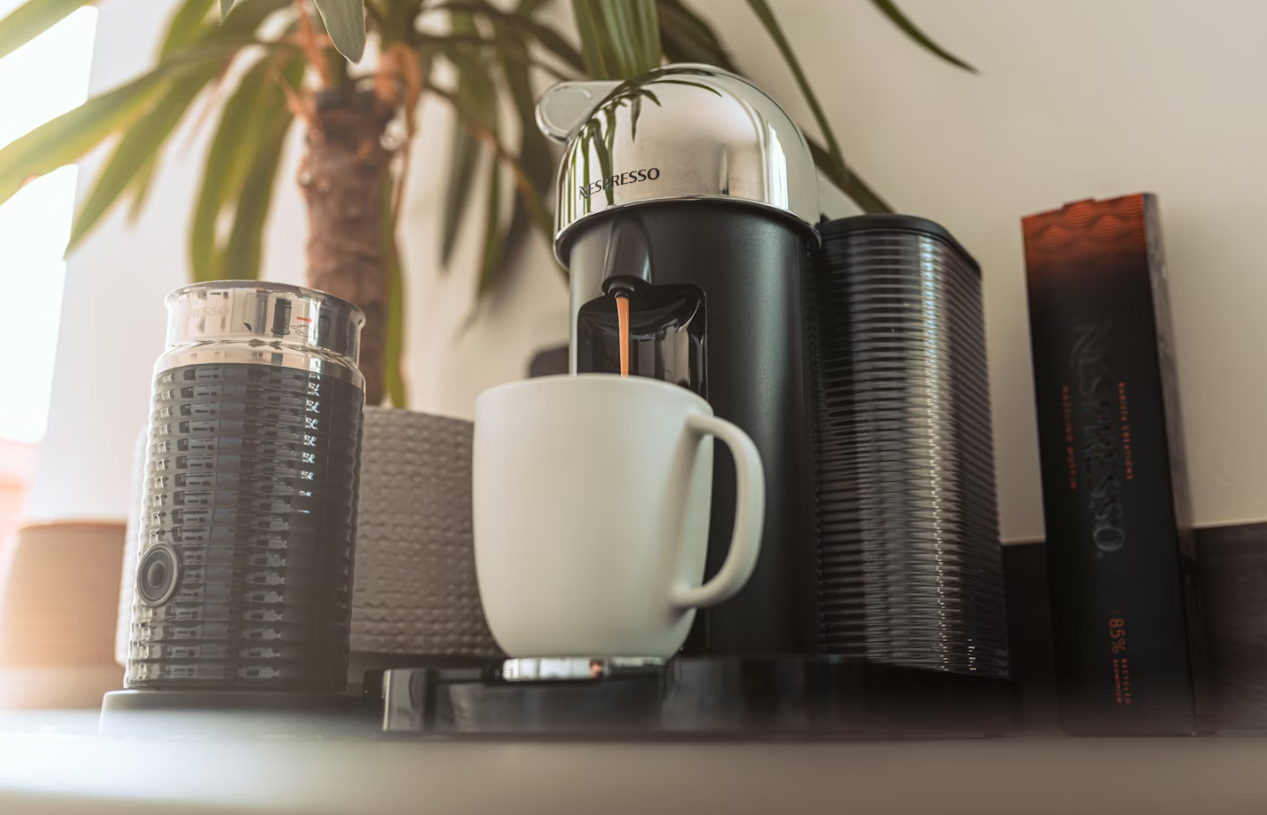
I independently research and test products to help you make the best choice. As an Amazon Associate I earn from qualifying purchases at no extra cost to you.
Let me say this upfront: I do not run a Nespresso in my own kitchen. I pulled espresso through a Gaggia Classic Pro this morning, and the drip machine in the corner is a Moccamaster. But plenty of friends and family members have Nespresso machines they love, and the question I hear most often when one of them finally stops foaming properly is the same one: what should I actually use to descale it?
Nespresso machines are wonderful in one specific way. They remove almost every decision from the process of making coffee. But that convenience does not mean the machine looks after itself. Hawaii water, mainland city water, well water, it does not matter. Scale builds up inside the boiler over time, and when it does, your coffee pours weaker, cooler, and slower than it should.
The short answer: the descaler most Nespresso owners should buy is a food-safe citric acid based formula that works across the Original and Vertuo lines. My specific pick is below, along with what to skip.
Why Your Nespresso Needs A Real Descaler, Not Vinegar
You will see "just use white vinegar" advice all over the internet. I get the appeal. Vinegar is cheap, it is already in the pantry, and it does break down mineral scale. But Nespresso explicitly warns against vinegar because acetic acid can damage the internal seals and aluminum components inside the machine, and the residual smell is almost impossible to rinse out. If you have ever tasted a coffee that was vinegar descaled the week before, you know what I mean.
A purpose-built descaler uses citric acid or sulfamic acid, which dissolve calcium carbonate cleanly and rinse out without a taste signature. That is what you want running through a machine you plan to keep for years.
The Descaler Nespresso Owners Actually Need
My recommendation is Full Circle Descaling Powder. It is a simple citric acid based formula that is safe for espresso machines, drip brewers, kettles, and pod machines including Nespresso OriginalLine and VertuoLine. A single bag lasts for many descaling cycles, which makes it significantly cheaper per use than the branded Nespresso descaling kits sold at a premium.
The process is straightforward. You dissolve a packet in warm water, run it through the machine as a descaling cycle, then run a few cycles of clean water to flush the system. No guesswork, no mystery chemistry, no weird taste.
Check the current price of Full Circle Descaling Powder on Amazon
How Often Should You Actually Descale
Nespresso's own guidance is every three months, or after about 300 cycles, whichever comes first. If your machine already has a descaling light flashing, you are overdue. If it has started pouring slowly or the crema looks thinner than usual, you are probably overdue too.
For anyone on hard water, which covers most of the mainland and a surprising amount of Hawaii depending on your building, lean toward the three month cadence. For soft water areas, you can stretch it a little, but not forever. Scale is cumulative, and waiting until the machine starts struggling means the cleanup is harder than it needed to be.
The Trap To Avoid
The trap I see people fall into is paying a premium for the branded Nespresso descaling sachets at the grocery store. They work fine. They are also roughly five to ten times more expensive per use than a general purpose citric acid descaler that does the exact same job. If you want to stay in the Nespresso ecosystem, that is a personal choice, and no one will judge you. But from a cost per clean perspective, a proper third party descaling powder is the obvious winner.
If you are descaling a pod machine anyway, it is also worth keeping a cleaner around for the parts of the machine the descaler does not touch: the drip tray, the capsule chute, and any removable milk components if you have a Lattissima or similar. I keep a bottle of Urnex Cafiza espresso machine cleaner on hand for exactly that reason. A tiny amount goes a long way.
The Final Cup
The best descaler for your Nespresso is the one you actually use on schedule. A simple citric acid powder like Full Circle does the job well, costs a fraction of the branded sachets, and will not leave any funky residue in your cups. That is all you really need from a descaler.
Descaling is the kind of small habit that decides whether your machine stays sharp for five years or starts limping after eighteen months. Stay on top of it and the thing will keep doing its job, pod after pod.
Regardless of which method you choose, you need the right station to support it. I have written deep-dive guides on how I organize my own counters for both workflows:
- For the Drip Lovers: My Work From Home Guide to the Best Coffee Setup
- For the Espresso Heads: My Work From Home Guide to the Best Espresso Setup
And remember, the best brewer in the world can't save bad beans. I use Trade Coffee to ensure I always have fresh, single-origin bags ready to grind.

Disclosure: This post contains affiliate links. If you buy something through them, I may earn a small commission, at no extra cost to you. It helps fuel the coffee, the testing, and the writing. Thanks for supporting the work.