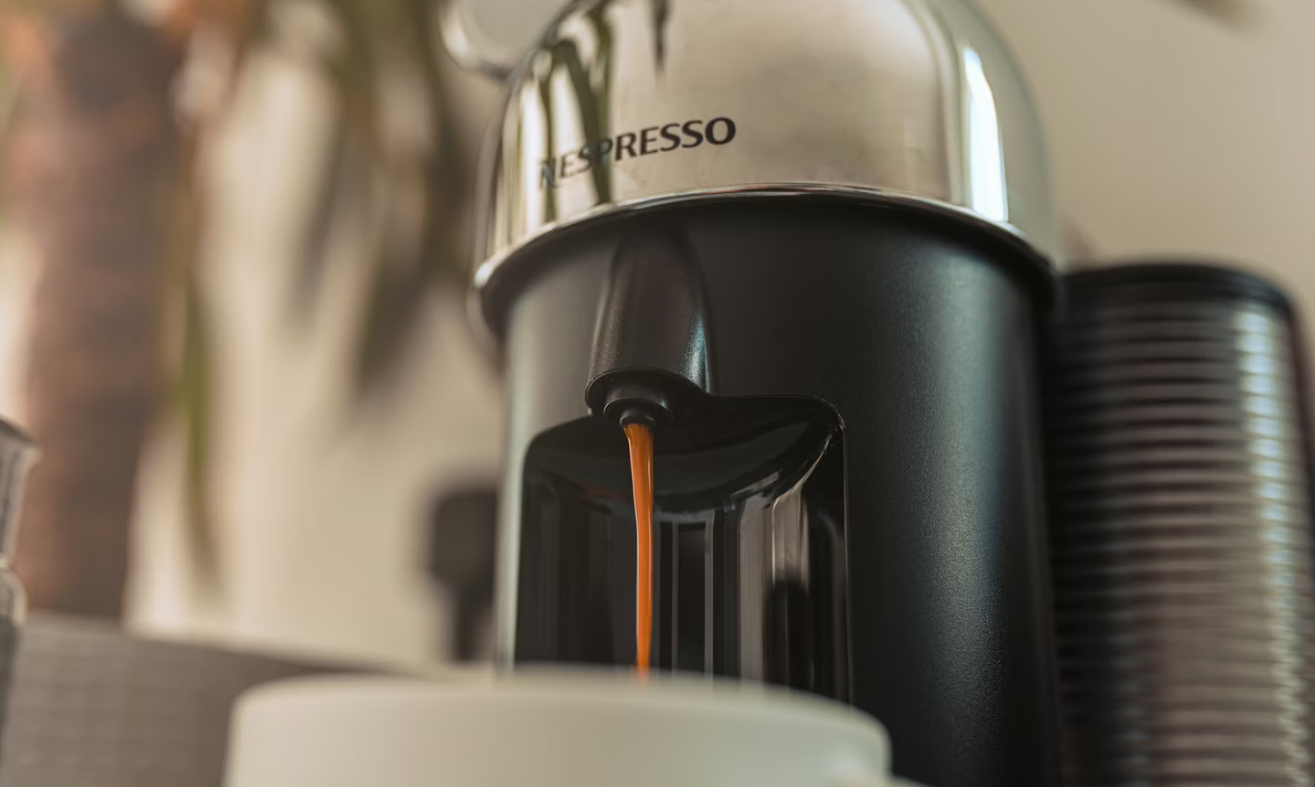
The Nespresso Essenza Mini promises convenience and simplicity in a compact package. But after testing dozens of espresso machines over the years, I can tell you that...


I independently research and test products to help you make the best choice. As an Amazon Associate I earn from qualifying purchases at no extra cost to you.
The Chemex is one of the most opinionated brewers in coffee, and the people who love it really love it. The people who hate it found the slow pour fussy and went back to a button. This guide is about which one you are, before you spend the money.
By the end you will know what the Chemex actually does well, where it falls short, how it compares to the brewers you might already own, and a clear yes/no/maybe call on whether to buy one.
The Chemex is a manual pour-over brewer made of one piece of borosilicate glass with a wooden collar tied around the middle by a leather thong. You scoop coffee into a thick paper filter, pour hot water over it in slow stages, and the cleanest cup you will ever drink slides into the bottom carafe. There is no electricity, no pump, no heating element. It is a vessel and a filter.
The design has barely changed since chemist Peter Schlumbohm patented it in 1941. He wanted a brewer that did not contribute any flavor of its own, no metal, no plastic, no rubber gaskets. Just inert glass, paper, and water. That single idea is why the Chemex still has fans in 2026 when there are infinitely more convenient options.
The thing that separates the Chemex from a standard automatic drip coffee maker is the filter. Chemex filters are about three times thicker than the supermarket variety. They trap more of the oils and fine sediment that show up in a French press or even most pour-overs. The result is a cup that is unusually clean, almost tea-like in clarity, with the origin character of the bean turned all the way up.
The Chemex's killer feature is clarity. A great single-origin Ethiopian or Colombian, brewed in a Chemex by someone who knows what they are doing, will reveal flavors that an auto-drip machine smooths over. Floral notes, fruit notes, the specific terroir of where the coffee was grown. If you have ever wondered why specialty coffee nerds get worked up about a particular farm or wash process, the Chemex is the brewer that proves the point.
It is also one of the easiest pour-overs to scale. You can brew anywhere from one cup to eight in the same vessel. Most pour-overs cap out around two cups before the math breaks down. The Chemex's cone is wide enough that the brew dynamics stay consistent across sizes.
And honestly, it is beautiful. There is no other brewer that doubles as a piece of glassware you would leave on the counter. That sounds shallow until you live with one. Coffee gear that looks like coffee gear gets shoved in a cupboard. Coffee gear that looks like a Bauhaus exhibit stays out and gets used.
The skill ceiling is real. Chemex brewing is forgiving compared to a true competition pour-over, but it is not press-the-button territory. You need to weigh the coffee. You need to weigh the water. You need to bloom for thirty seconds. You need to pour in slow concentric circles. Done badly, a Chemex makes a thin, sour, watery cup that is somehow worse than what came out of your old auto-drip.
It is slow. Four to five minutes for a single brew once you factor in the bloom and the staged pours. If your mornings involve kids, partners, or anything resembling a schedule, this matters. People who romanticize the ritual usually have either no kids or older kids who let them have a quiet kitchen.
It is fragile. One piece of glass with a wooden collar means one drop on a tile floor and you are buying another one. The replacement filters are also more expensive than standard cone filters, and they are not always sitting on the grocery shelf when you need them.
And it has a single function. Unlike a French press or AeroPress, you cannot really repurpose a Chemex into anything else. You bought a beautiful pour-over carafe, that is what you have.
Three quick comparisons help most people make a call.
The V60 is the other big-name pour-over. Smaller, cheaper, more popular among baristas. The V60 is faster to brew and more sensitive to technique, which means a great V60 cup is even brighter and more nuanced than a Chemex, but a bad V60 cup is worse. The Chemex's thicker filter and wider cone are more forgiving. If you are intrigued by pour-over but unsure about the skill investment, the Chemex is the more graceful introduction. If you are committed and want the deepest taste rabbit hole, the V60 wins. See my V60 vs Kalita comparison for more on the V60 family.
Moccamaster is the gold standard for automatic drip. Press a button, get great coffee, ten years of daily service. The Chemex requires more from you and rewards you with a cleaner, brighter cup when you put in the work. The honest truth: most people who buy a Chemex thinking it will replace their auto-drip end up with both. The Chemex becomes the weekend brewer when there is time to enjoy the process. The Moccamaster handles weekday mornings. If you are choosing one and want consistent volume, get the Moccamaster.
Two completely different cups. The French press is heavy, oily, and full-bodied because the metal mesh lets oils and fines through. The Chemex strips both out for a cleaner, lighter cup. Neither is better, they are different drinks. If you order an espresso-based latte and like the body of milk, you might prefer the French press. If you order black filter coffee at a third-wave shop and notice the fruit notes, the Chemex is closer to that experience.
Full disclosure, I do not own a Chemex anymore. I run a Technivorm Moccamaster for daily drip and a Gaggia Classic Pro on the espresso side. The Moccamaster handles two-person mornings without ceremony. The espresso machine handles the slower coffee moments.
The case for me adding a Chemex is real, though. When I get a single-origin bag from Trade Coffee with notes that read like a wine label, the Moccamaster does it justice but a Chemex would let me hear those notes louder. If you mostly drink blends and roasts on the darker side, you will not miss having one. If your beans are getting more interesting and your weekend mornings are getting slower, that is the moment a Chemex starts to make sense.
Three quick reads on whether this is your brewer.
Buy a Chemex if you are:
Skip the Chemex if you are:
Maybe a Chemex if you are:
If you decide to pull the trigger, grab the Chemex on Amazon. Get the eight-cup classic unless you are explicitly brewing for one. Pair it with a good burr grinder, because grind size matters more on a Chemex than almost any other brewer. The Baratza Encore is the right entry-level move. And get fresh single-origin beans from a roaster like Trade Coffee. The Chemex is at its best with beans worthy of it.
What grind size do you use for a Chemex? Medium-coarse. Coarser than auto-drip, finer than French press. On the Baratza Encore, somewhere in the 18 to 22 range works for most people. Too fine and the brew chokes. Too coarse and you get sour, under-extracted coffee.
Can you use regular coffee filters in a Chemex? No. Chemex filters are specifically thicker and shaped for the cone. A standard cone filter from the grocery store will not fit and would not produce the same clean cup if it did. Stick with the Chemex-branded filters.
How long does a Chemex take to brew? About four to five minutes from bloom to final pour for a single 30-gram brew. Longer for larger batches. Plan accordingly.
Is a Chemex worth it for one person? Yes, the eight-cup model still works for solo brewing if you scale the dose down. A 15-gram dose with 240 grams of water makes a solid single cup. The Chemex's wide cone is forgiving across sizes.
Does a Chemex need special water? Filtered water always helps any brewer. The Chemex is not unusually picky about water quality, but its clarity makes mineral imbalances more noticeable than they would be in a French press or auto-drip.
Regardless of which method you choose, you need the right station to support it. I have written deep-dive guides on how I organize my own counters for both workflows:
And remember, the best brewer in the world cannot save bad beans. I use Trade Coffee to ensure I always have fresh, single-origin bags ready to grind.

Disclosure: This post contains affiliate links. If you buy something through them, I may earn a small commission, at no extra cost to you. It helps fuel the coffee, the testing, and the writing. Thanks for supporting the work.
The Nespresso Essenza Mini promises convenience and simplicity in a compact package. But after testing dozens of espresso machines over the years, I can tell you that...
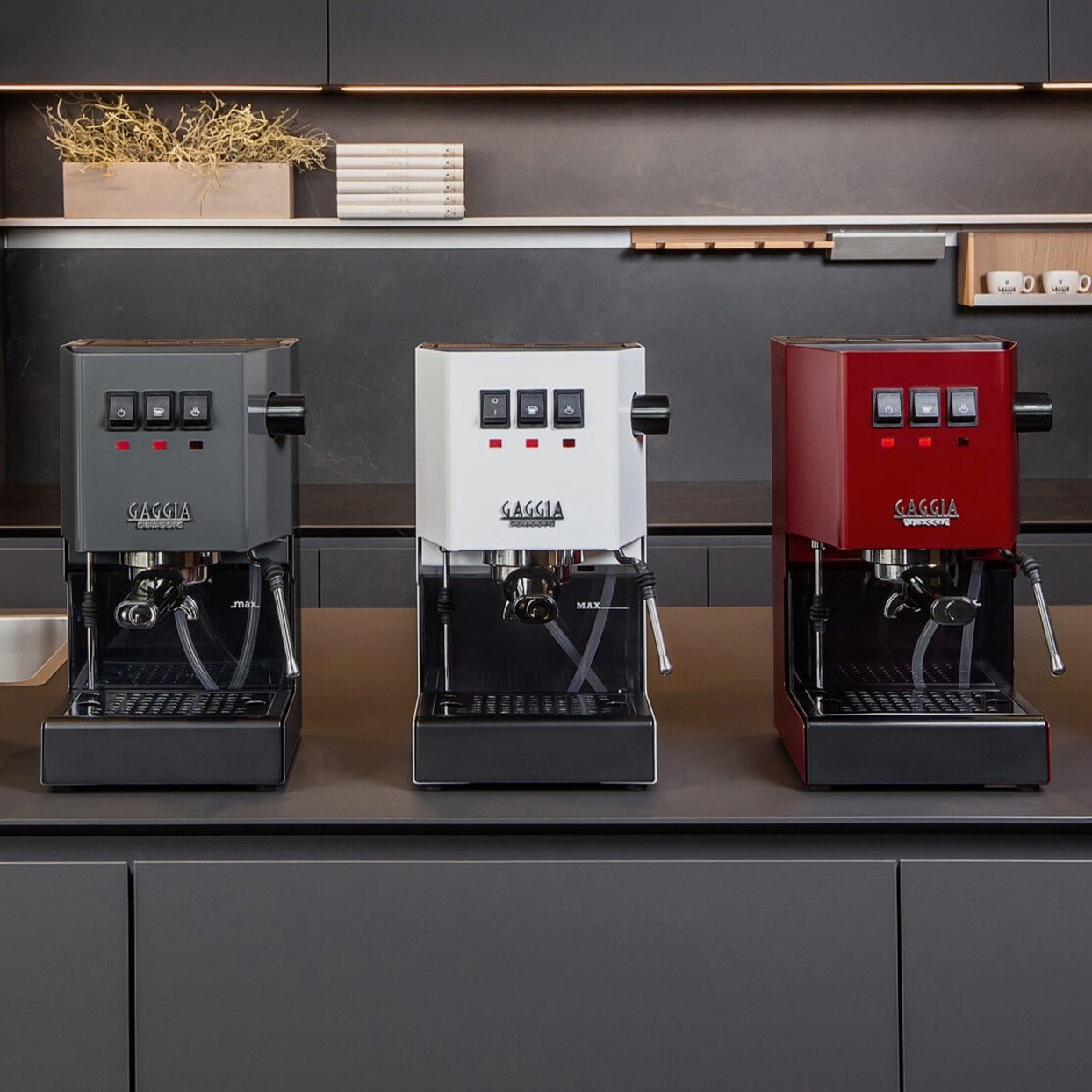
When people ask me for a recommendation for a budget friendly espresso machine, they are usually hoping I’ll point them toward a $100 appliance at a big-box store. I...