

I independently research and test products to help you make the best choice. As an Amazon Associate I earn from qualifying purchases at no extra cost to you.
A ristretto is the shot I pull when I want to taste what a bean can actually do. Same coffee, same basket, half the liquid. It is the most concentrated version of an espresso shot you can make without changing anything about your gear, and it is the fastest way I know to figure out whether a bag of beans is any good.
Most articles about the ristretto stop at "it means restricted in Italian" and leave you there. This one goes further: what changes in the cup, the ratio I actually use, how to pull one on a home machine, and the caffeine question almost everybody gets backwards.
What Is a Ristretto?
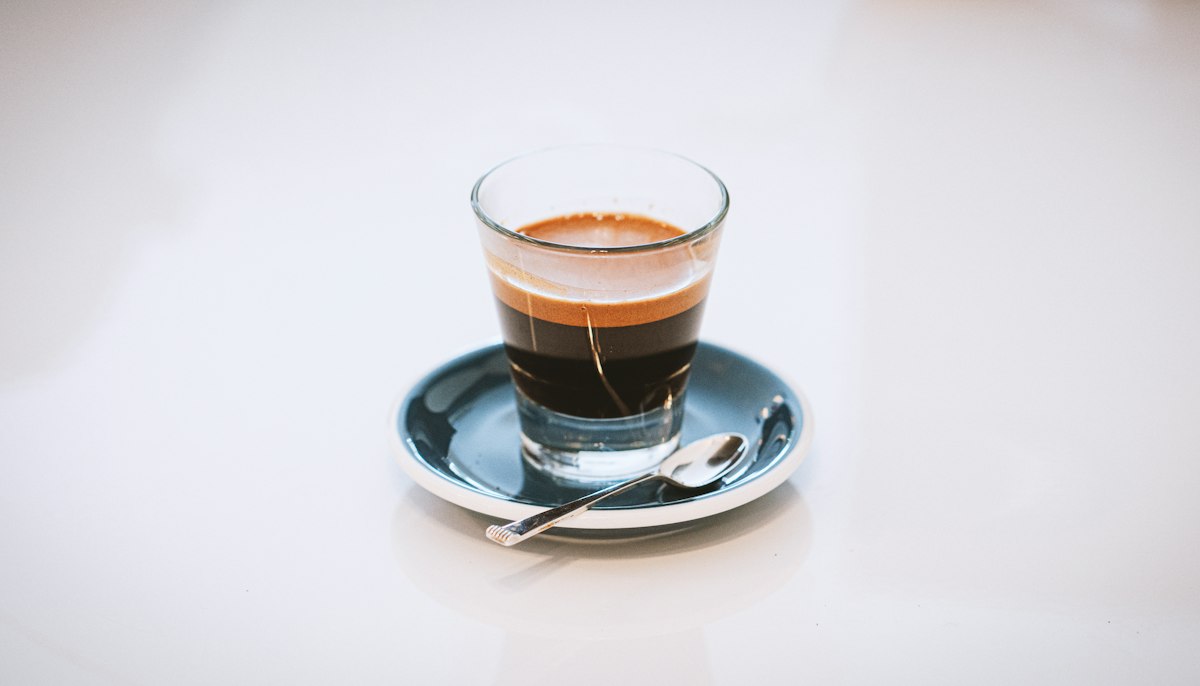
Photo by Adi Goldstein on Unsplash
A ristretto is a short shot of espresso. You use the same dose of ground coffee and stop the shot early, so roughly half as much liquid ends up in the cup.
Here is the whole idea in numbers. A standard double espresso pulls about 36 grams of liquid from 18 grams of coffee, a 1:2 ratio. A ristretto from that same 18 grams stops somewhere between 18 and 27 grams of liquid, so 1:1 to 1:1.5. Less water through the same puck.
That is the only difference. Not a different bean, not a different machine, not a special button. The Italian word means restricted, and what is being restricted is the water, not the coffee.
Why it matters is what comes out. Espresso extracts in stages. The sweet, syrupy, fruity compounds come out early. The bitter, drying, papery ones come out late. When you cut the shot short, you keep the early part and leave most of the late part in the puck.
Ristretto vs Espresso vs Lungo
These three are the same drink at three different lengths. Thinking of them as a spectrum rather than three separate recipes makes the whole thing click.
- Ristretto, roughly 1:1 to 1:1.5. Short, thick, sweet. The most concentrated, the least bitter.
- Espresso, roughly 1:2. The default almost everywhere. Balanced between sweetness and bite.
- Lungo, roughly 1:3 or longer. More liquid, thinner body, and the bitterness the ristretto avoided.
A lungo is not the same thing as an Americano, by the way, even though people use the words as if they were. A lungo pulls more water through the coffee. An Americano pulls a normal shot and adds hot water after. One extracts more, the other dilutes. I go through that difference properly in my Americano post.
If the rest of the espresso menu is still a blur, my espresso drinks cheat sheet lays out every drink in plain English.
What a Ristretto Actually Tastes Like
Sweeter. That is the headline, and it surprises people who assume a shorter, darker-looking shot must be harsher.
The texture is the first thing you notice. A ristretto is thick in a way a normal shot is not, closer to syrup than to liquid. It coats your mouth. The crema sits heavier on top and lasts longer.
The flavor is rounder and shorter. You lose some of the top-end acidity and most of the dry, bitter finish. What is left is the sweet middle of the shot, concentrated. On a good natural-process Ethiopian it can taste almost like jam.
The trade-off is real, and nobody mentions it. A ristretto has less to say than a full shot. You are cutting off the end of the extraction, and some of what lives in that last third is complexity. A bright, delicate, light-roasted coffee can come out flat and one-note as a ristretto, because you never let the interesting acidity out of the puck.
So it is not automatically the better shot. It is the better shot for dark and medium roasts, for beans that turn bitter on you, and for anything going into milk.
How to Pull a Ristretto at Home
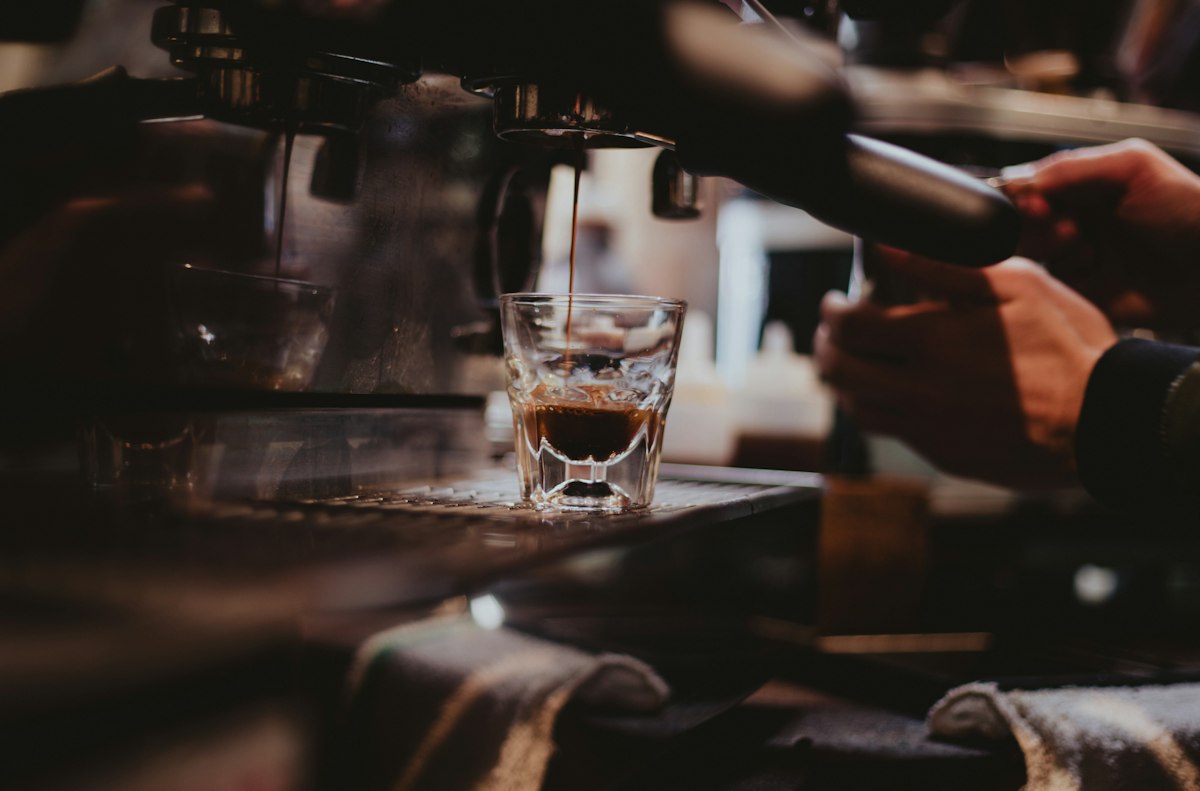
Photo by Jason Betz on Unsplash
You do not need a new machine or a special basket. You need to stop the shot earlier and grind finer to compensate.
Here is the recipe I use every morning:
- Dose 18 grams into a standard double basket. Do not change your dose. This is the part people get wrong, because a ristretto is not a smaller shot, it is a shorter one.
- Grind finer than your normal espresso setting. Two or three clicks is usually enough. You are asking less water to do the work, so it needs more contact time with the coffee.
- Distribute and tamp as usual. Short shots punish channelling harder than long ones, because there is less liquid to average out the mistake.
- Stop at 24 grams out. That is a 1:1.3 ratio, which is where I have landed after a lot of trial and error. Start there and adjust to taste.
- Aim for 25 to 30 seconds. If you hit 24 grams in 15 seconds, the grind is too coarse and the shot will taste thin and sour. If it crawls past 40, go coarser.
That last point is the one that matters. A ristretto is not just "stop the shot early". If you stop a normal-grind shot at 24 grams, you get an under-extracted espresso, which is sour and hollow, not sweet and thick. The finer grind is what makes it a ristretto instead of a mistake.
Weighing the output is the only way to do this consistently. Eyeballing the cup works for an espresso and falls apart for a ristretto, because the margin between 20 grams and 28 grams is the whole drink. A small scale that fits on the drip tray is the fix, and the Maestri House mini scale is the kind of thing that does the job without taking over your counter. Any scale with a timer and 0.1 gram resolution will get you there.
👉 Check the current price of the Maestri House mini scale on Amazon
I keep a log of dose, yield, and time for each new bag, which is how I know 24 grams is my number and not just a number I read somewhere. I ended up building Dialed Shots to do that on my phone instead of in a notebook. It is free, there are no ads, and it is iPhone only.
Why Cafes Pull Ristretto for Milk Drinks
This is the part that changed how I make coffee at home.
Milk is sweet, heavy, and it flattens coffee. Pour six ounces of steamed milk over a normal double shot and a lot of what made the espresso interesting simply disappears. The usual fix is to use more coffee or a darker roast, which is why so many cafe lattes taste like scorched milk.
The better fix is a shorter shot. A ristretto goes into milk with more sugar and more body per millilitre, so it still tastes like coffee under six ounces of milk. This is standard practice in a lot of Australian and New Zealand cafes, and it is the main reason a flat white in Melbourne tastes different from a latte of the same size back in the States.
After years of drinking flat whites in Australia, this was the single habit I brought home that made the biggest difference. If you make milk drinks and they taste weak, the problem is usually not your milk technique. It is the length of your shot.
It works best in the smaller drinks. My favorite is the cortado, which is roughly equal parts espresso and steamed milk, and a ristretto base makes it taste twice as rich. I wrote about why that is my default milk drink and the ratio I use for it.
What I Pull Ristretto On
My machine is the Gaggia Classic Pro. It is a single-boiler, semi-automatic machine with a commercial 58mm portafilter, and it has no programmed shot buttons at all. For ristretto that is a feature, not a limitation. You flip the switch, you watch the scale, you flip it off. There is nothing to reprogram because there was never a program.
👉 Check the current price of the Gaggia Classic Pro on Amazon
The grinder matters more than the machine here, and mine is the TIMEMORE Sculptor 064S. Ristretto lives or dies on small grind adjustments, and a grinder that cannot move in small, repeatable steps makes the whole thing guesswork. Single dosing helps too, because I can switch from a ristretto grind to a normal espresso grind and back without a hopper full of beans in the way.
👉 Grab the TIMEMORE Sculptor 064S on Amazon
For the puck itself I use a TIMEMORE 58mm tamper, flat and heavy enough that I am not fighting it at six in the morning. Paired with a distribution tool it does more for a short shot than any upgrade to the machine would. I explained why in my WDT tool post.
👉 See the TIMEMORE 58mm tamper on Amazon
Would I change anything? A machine with a pressure gauge would tell me more about what is happening during those 25 seconds. But the gear is not what is holding my shots back, and it probably is not what is holding yours back either.
Where to Go Next
If the ristretto is where you are starting, these are the posts worth reading after this one.
- Espresso Based Drinks, A Reluctant Snob's Cheat Sheet, every drink on the menu explained without the jargon.
- Home Barista Starter Guide, the whole kit in the order that actually matters.
- Best Espresso Machine Under $500, if you are still choosing a machine.
- Best Home Espresso Grinder, the part of the setup that decides whether ristretto is even possible.
- The Best Single Dose Coffee Grinder, why I grind one shot at a time.
- Best Espresso Coffee in Kona, where I go when I am not making it myself.
Ristretto FAQ
What is a ristretto?
A short shot of espresso. The same dose of ground coffee as a normal shot, stopped early so about half the liquid ends up in the cup. Sweeter, thicker, and less bitter than a standard espresso.
Does a ristretto have more caffeine than an espresso?
No, and this is the thing most articles get backwards. A ristretto is more concentrated, so it has more caffeine per millilitre. But it has less caffeine in total, because you ran less water through the same coffee and extracted less of everything, caffeine included. A ristretto from 18 grams has less caffeine than a full double from 18 grams.
What is the ratio for a ristretto?
Between 1:1 and 1:1.5, coffee to liquid. From an 18 gram dose that is 18 to 27 grams in the cup. I pull mine at 24 grams, which is 1:1.3.
Can I pull a ristretto on any espresso machine?
On any machine where you control when the shot stops, yes. Manual and semi-automatic machines are ideal. On a pod machine the ristretto button is usually just a smaller pre-set volume through the same capsule, which is the same idea with none of the control.
Is a ristretto just an under-extracted espresso?
Only if you forget to grind finer. Stopping a normal-grind shot early gives you a sour, hollow cup. Grinding finer and then stopping early gives you a ristretto. The grind is what separates the two.
The ristretto is the cheapest upgrade in espresso. No new gear, no new beans, just a finer grind and the discipline to stop the shot while it still looks like there is more to come.
Pull one tomorrow morning next to your normal shot and taste them side by side. That comparison teaches you more about your beans and your grinder than any article can, including this one.
Regardless of which method you choose, you need the right station to support it. I have written deep-dive guides on how I organize my own counters for both workflows:
- For the consistent drip: My Work From Home Guide to the Best Coffee Setup
- For dialed Espresso: My Work From Home Guide to the Best Espresso Setup
And remember, the best brewer in the world can't save bad beans. I use Trade Coffee to ensure I always have fresh, single-origin bags ready to grind.

Featured photo by Collin Merkel on Unsplash
Disclosure: This post contains affiliate links. If you buy something through them, I may earn a small commission, at no extra cost to you. It helps fuel the coffee, the testing, and the writing. Thanks for supporting the work.