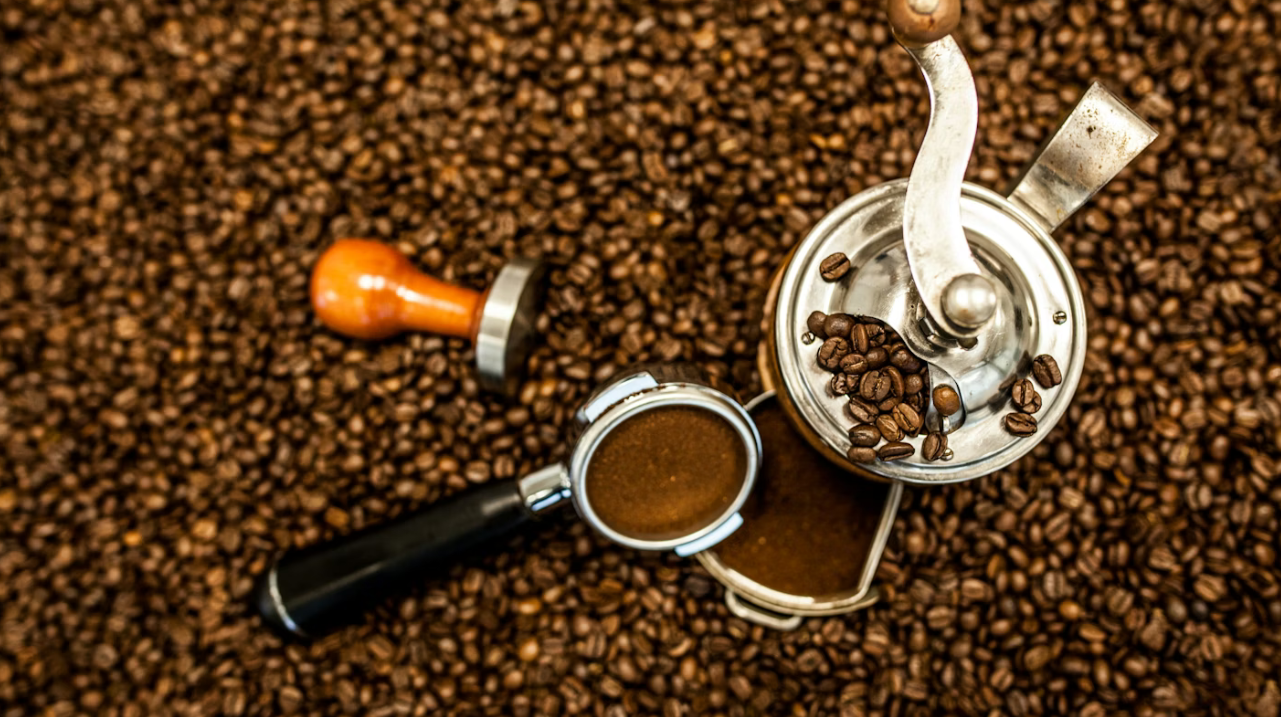
Ethiopian coffee beans are some of the most interesting coffee you can drink. Bright, fruity, floral; they taste nothing like the dark, bitter stuff most people grew up...


I independently research and test products to help you make the best choice. As an Amazon Associate I earn from qualifying purchases at no extra cost to you.
The green beans coffee pitch is everywhere right now. Buy unroasted beans for half the price of pre-roasted ones, fire up a popcorn machine or a small home roaster, save money, drink fresher coffee than anything you've ever had. On paper it sounds like a no-brainer. In practice it falls apart faster than most people expect. I've researched the setup obsessively, watched friends try it and quit inside a month, and the real math gets ugly the moment you account for everything nobody mentions in the tutorials. Here's what home roasting actually requires, what trips most people up, and why I think the whole pitch is overstated for everyone except a small subset of true hobbyists.
The pitch usually starts with a popcorn machine. Five bucks at a thrift store, a paper bag, and you're a roaster. That's the version that hooks people. It's also the version that produces the worst coffee you'll ever drink.
To roast green coffee beans well, you need a few things working together. A heat source you can control with some precision. Even airflow so the beans roast uniformly instead of scorching on one side. A way to cool the beans fast at the end of the roast, because coffee keeps cooking in residual heat for another two minutes after you pull it. And a way to deal with the chaff, which is the papery skin that comes off the beans during roasting and gets everywhere.
The popcorn machine handles maybe two of those four. A real entry-level home roaster, something like a Behmor or a Fresh Roast SR540, runs $250 to $500. Add a cooling tray, a kitchen scale you trust to a tenth of a gram, a thermometer, and somewhere to vent smoke that isn't your own kitchen. The smoke part is not a small detail. Roasting two-tenths of a pound of beans in an apartment kitchen produces enough smoke to set off the alarm and keep your unit smelling like burnt toast for two days. I lived in a condo in Hawaii for years and the math on roasting indoors stopped making sense the first time I thought about it seriously.
So before you've bought a single green bean, you're $300 to $600 deep on gear and you've solved exactly one of the actual problems with making good coffee at home: the freshness gap.
Green beans cost about $7 to $10 a pound. Pre-roasted specialty beans cost $18 to $24 a pound. The math looks like a slam dunk until you account for the fact that beans lose roughly 12 to 18 percent of their weight during roasting, mostly water. That $10 pound of green is closer to $12 a pound roasted before any of your other costs.
Then there's the gear amortization. A $400 roaster spread across, say, two pounds a week for three years gets you to about $1.30 a pound in equipment cost. Cooling tray, scale, thermometer, vented hood, replacement parts, all of it adds up. By the time you're done you're at $14 to $16 a pound for beans you roasted yourself, assuming you don't burn any.
And you will burn some. The first ten or fifteen batches go into a paper bag in the trash because they're either underdeveloped, scorched, or both. That's a real cost. So is the time. A typical home roast cycle, including warm-up, roast, and cool-down, runs 20 to 25 minutes for a quarter-pound of beans. To keep a regular drinker stocked you're roasting two or three times a week. That's an hour or more of active attention every week to do the thing your roaster used to do for you.
The biggest failure mode is something most home roasters don't talk about until they've been doing it for a year. Stale roasts. Coffee peaks four to ten days after roasting. Before that, the beans are still off-gassing CO2 and tasting flat. After about three weeks, the oils start to oxidize and the cup turns dull. The whole point of home roasting is supposed to be freshness, but unless you're roasting in tiny batches every few days, you end up with the exact same staleness problem you were trying to escape, just with extra steps.
The second failure mode is consistency. Specialty roasters dial in a profile for a specific bean across many batches, with industrial-grade equipment that controls heat to a fraction of a degree. A home setup, even a good one, varies batch to batch based on ambient temperature, bean moisture, and how warm the roaster is when you start. Two pounds of the same Ethiopia natural will taste meaningfully different across three different home roasts. If you care about reproducing what you liked, that's a real problem.
The third failure mode is sourcing. Pre-roasted specialty coffee comes from roasters who have relationships with farms and importers that go back years. They know the lots, they know the producers, they cup constantly. Buying green beans online, you're picking from a much smaller pool, and the quality varies wildly. The good green-bean importers exist, but the entry point is a lot less forgiving than just trusting a roaster you already like.
Every home roasting tutorial promises a fast learning curve. "By batch ten you'll be dialed in." That's optimistic. The actual learning curve is closer to three months of regular roasting before you're producing coffee that meets the standard of a decent third-wave roaster. You have to learn the audible cues for first crack and second crack, you have to develop a feel for how a particular bean behaves at different drum temperatures, and you have to taste enough of your own work to know when you're hitting the spot you want.
Most people who pick up the hobby quit somewhere around week six. Either the smoke gets old, the inconsistency gets old, or they realize that the coffee they're making is fine but not better than what they were drinking before. The ones who push through are people who genuinely enjoy the process for its own sake, the same way someone enjoys home brewing beer or fermenting their own kimchi. That's a real and valid hobby. It is not a money-saving move and it is not, for most people, a path to better coffee.
I'm a daily coffee drinker who lives in a condo in Hawaii with two kids underfoot. The economics of home roasting never made sense for me, and the smoke part alone would have ended the experiment in week one. What I use instead is Trade Coffee, a subscription that matches you with small roasters from around the country based on your actual taste preferences and ships beans within days of roasting.
The reason this works for me is that it solves the only problem home roasting was supposed to solve, which is freshness, without any of the costs. Trade ships free to Hawaii, which is rare. The roasters they partner with are people whose names you'd recognize if you follow specialty coffee. The beans show up labeled with the roast date, and they hit my doorstep within a week of being roasted, which is exactly the window where the cup is best.
I've been a Trade subscriber for over six years. The variety alone is worth it. I've had Ethiopian naturals from a roaster in Massachusetts, Colombian washed beans from a roaster in Brooklyn, Rwandan single-origins from somewhere in the Pacific Northwest. None of those are on a grocery store shelf. I would not be drinking that range of coffee if I were home roasting, because I'd be locked into whatever green beans I could source consistently.
If you're curious about the broader case for fresh-roasted beans without the home-roasting headache, I've written a few related deep-dives that fit together as a cluster:
How much does it really cost to start home roasting green beans?
A bare-minimum setup with a popcorn machine and a kitchen scale runs about $40 and produces inconsistent, often-acrid coffee. A real entry-level home roaster runs $250 to $500, plus another $50 to $100 for a cooling tray, scale, and thermometer. Add the cost of replacement parts and the inevitable burnt batches and you're looking at $400 to $700 in your first year before you account for the green beans themselves.
Can you actually save money roasting green beans coffee at home?
The math only works if you ignore your time, ignore the failed batches, ignore equipment amortization, and ignore the weight loss during roasting. Once you account for all of that, home roasting is roughly break-even with buying high-quality pre-roasted specialty coffee. If you value the hobby for its own sake, that's fine. If you're doing it to save money, it isn't a real savings.
How long do home-roasted beans actually stay fresh?
About three weeks at peak, same as professionally roasted beans. The freshness advantage of home roasting only exists if you're roasting in small batches every few days, which is a significant time commitment that most home roasters don't sustain.
What's the smell like when you roast coffee at home?
Worse than you think. The chaff burns and produces a smoke that is not pleasant and does not vent fast. Even with a range hood it lingers. In an apartment, condo, or any home with sensitive smoke detectors, this is a real problem.
Is there any case where home roasting makes sense?
Yes. If you genuinely enjoy the process, have a dedicated outdoor space or vented garage, and treat it as a hobby on its own terms, home roasting is rewarding. If you're doing it primarily to save money or get fresher coffee than what a good subscription delivers, the math does not work.
Conclusion
Home roasting green beans coffee is one of those ideas that sounds clean on paper and gets messy fast in practice. The gear is more expensive than the pitch admits, the learning curve is longer, the smoke is real, and the cup at the end is not reliably better than what you can get shipped to your door from a serious specialty roaster. For most people, the better move is to skip the gear, skip the smoke, and let the people who do this for a living handle the part that's hard.
If you want fresh beans without any of the headache, Trade has been the path that worked for me. Six years in, still the easiest way I've found to drink genuinely good coffee at home without turning my kitchen into a small industrial operation.
Regardless of which method you choose, you need the right station to support it. I have written deep-dive guides on how I organize my own counters for both workflows:
And remember, the best brewer in the world can't save bad beans. I use Trade Coffee to ensure I always have fresh, single-origin bags ready to grind.

Disclosure: This post contains affiliate links. If you buy something through them, I may earn a small commission, at no extra cost to you. It helps fuel the coffee, the testing, and the writing. Thanks for supporting the work.
Ethiopian coffee beans are some of the most interesting coffee you can drink. Bright, fruity, floral; they taste nothing like the dark, bitter stuff most people grew up...
I independently research and test products to help you make the best choice. As an Amazon Associate I earn from qualifying purchases at no extra cost to you.
Most of...