Daniel Norris
I independently research and test products to help you make the best choice. As an Amazon Associate I earn from qualifying purchases at no extra cost to you.
A pressurized portafilter is built to make something that looks like espresso without an espresso grinder. That is useful when you are starting out, and it is also why so many first shots at home taste flat under a thick layer of foam.
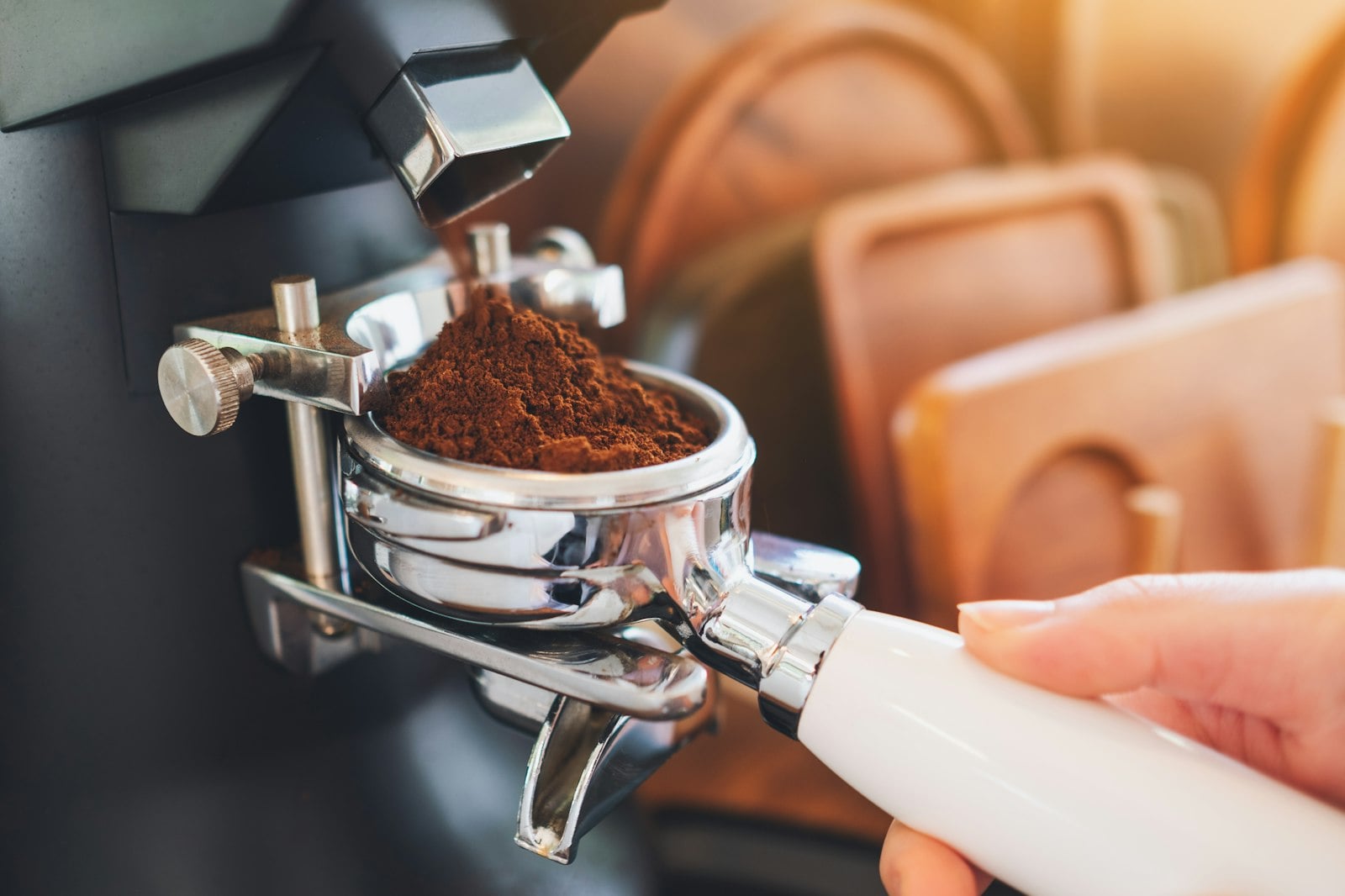
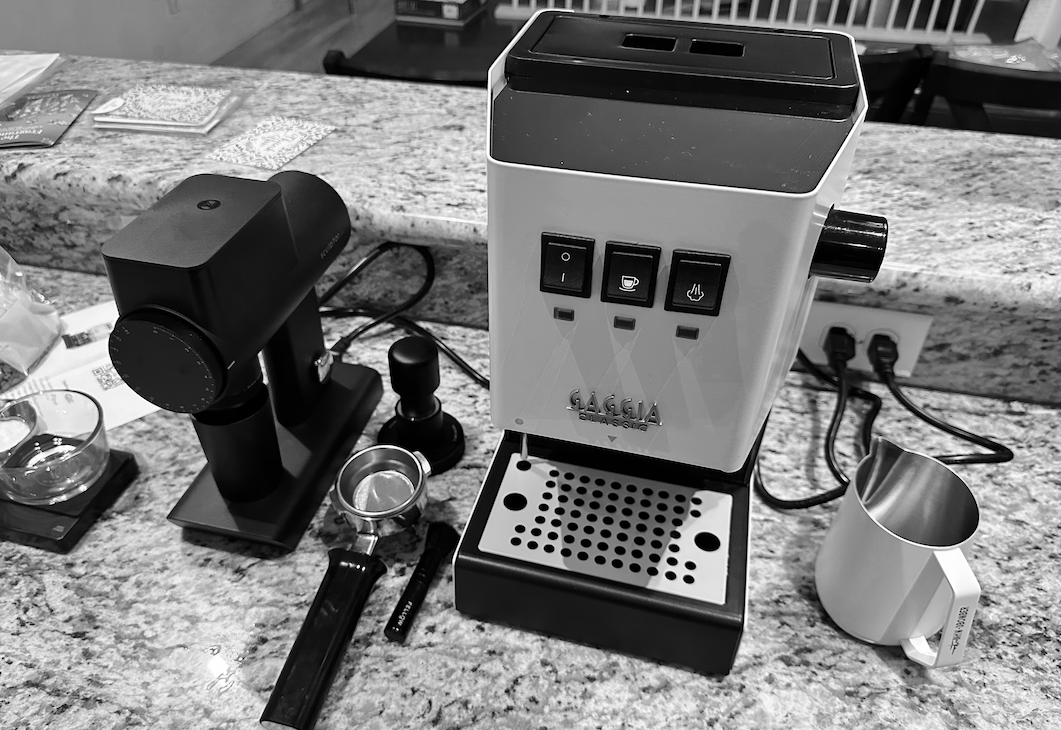
I pull my shots on the 58 mm portafilter of my Gaggia Classic Pro: 18 g of coffee in, 36 g of espresso out, weighed every time. This guide covers what a pressurized portafilter does, why its crema fools people, who should keep one, and how to move to a standard basket when you're ready.
👉 Check the current price of the Gaggia Classic Pro on Amazon
What Is a Pressurized Portafilter?
A pressurized portafilter is a portafilter that creates its own resistance to the water, so the coffee in it doesn't have to. On most home machines the pressure comes from the basket, not the handle, which is why you'll also see it called a pressurized basket or a dual-wall basket.
Look underneath one and you'll see the difference. A dual-wall basket has two floors. The inner floor has the usual screen of small holes, and the outer floor has a single pinhole. Water passes through the coffee, collects between the two walls, and gets forced out through that one tiny hole.
A few machines put the restriction in the portafilter itself instead, with a valve or pin in the spout. It works the same way. Something other than the coffee is holding the pressure back.
If you're not sure which basket you have, take it out and hold it up to the light. One hole in the bottom means pressurized. Hundreds of evenly spaced holes and no second wall means standard.
Pressurized vs Standard Portafilter Baskets
Espresso needs water pushed through coffee at around 9 bar of pressure. To build that pressure, something has to slow the water down.
In a standard basket, also called single-wall or non-pressurized, the coffee does it. You grind fine, dose a set weight, tamp it into a firm puck, and that puck is what the pump pushes against. Grind too coarse and the water runs straight through. Grind too fine and it barely drips.
In a pressurized basket, the pinhole does it. The coffee can be coarse or a little stale, and the basket will still hold back enough water to push out a shot. It was designed to work without a good grinder.
The tradeoff is control. With a standard basket, every change you make to dose, grind or yield shows up in the cup. With a pressurized basket, the pinhole flattens most of those changes out, so the shot tastes about the same whether you got it right or not.
Basket diameter is a separate question from pressurized or standard. My guide to the espresso machine portafilter covers what the 58, 54 and 51 mm sizes mean for the tampers and baskets you can buy.
Pressurized Portafilter Crema: Why It Looks So Good
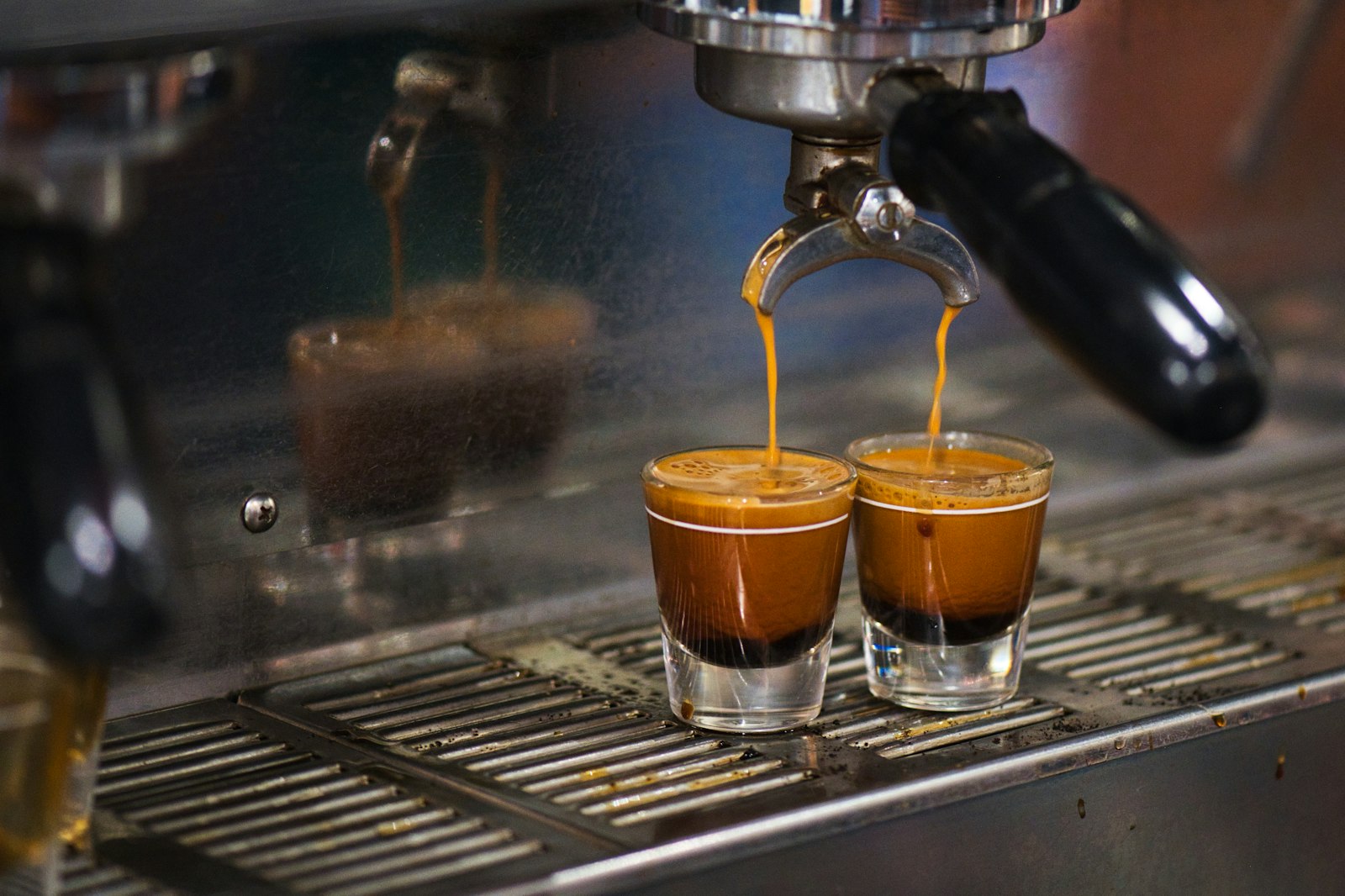
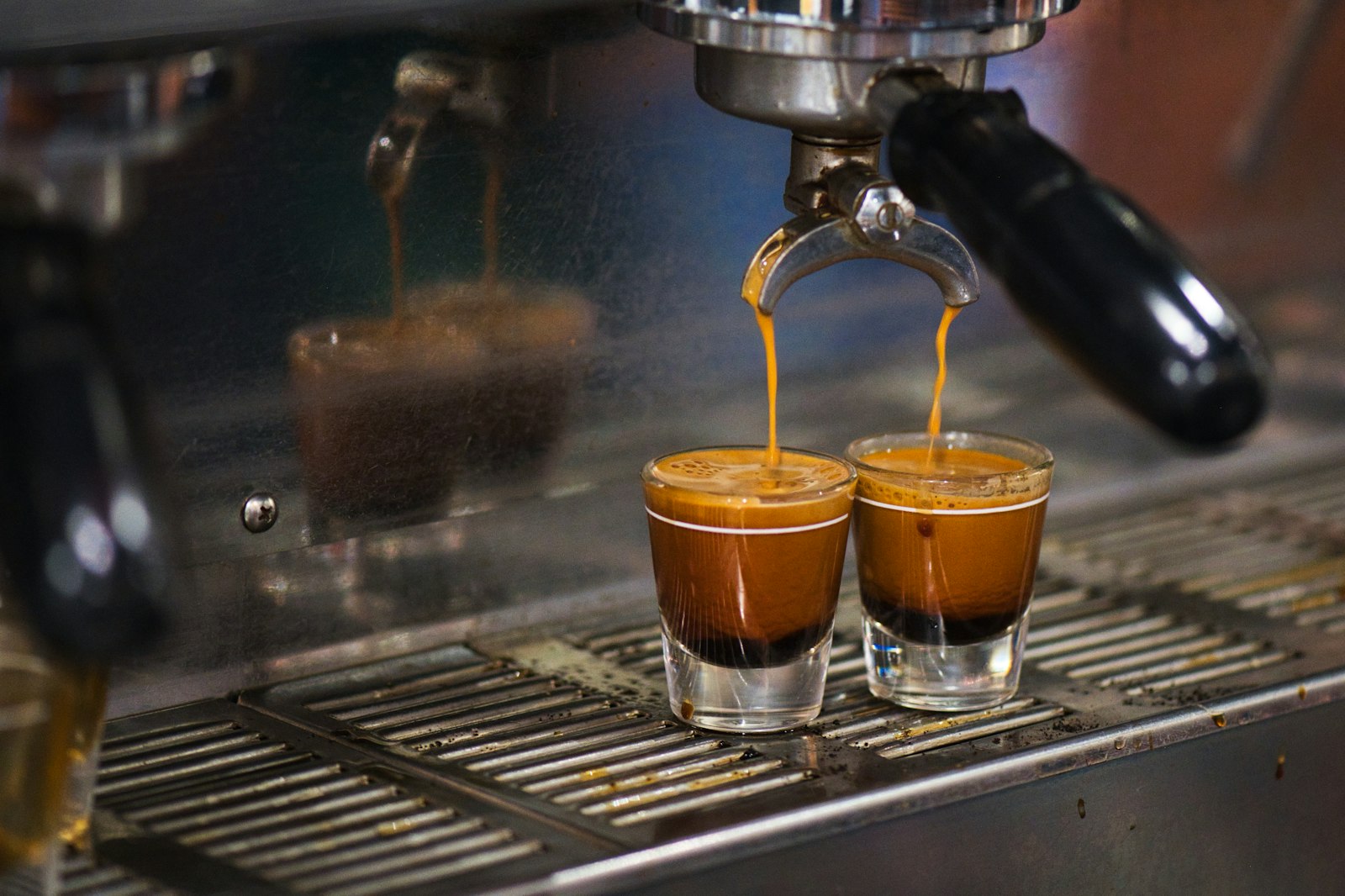
The first thing most people notice with a pressurized portafilter is the crema. It comes out thick and bubbly, and it looks like the photos.
Most of that is foam. When coffee gets forced through a single pinhole at pressure, it picks up air on the way out. Real crema comes from gases and oils in fresh coffee being pushed through a properly resisting puck, and it tends to be finer and a darker reddish brown.
This matters because crema is one of the ways you read a shot. With a standard basket, pale and thin crema that disappears fast can mean the shot ran too fast or the beans are old. With a pressurized basket, you get the same foamy head almost every time, so it can't tell you much.
Taste is the better test. A shot from a pressurized basket usually tastes a little flat, without the sweetness and body you get when the grind is dialed in. When a shot from a standard basket goes wrong, my guide to why espresso tastes bitter or sour helps you work out which way to move.
Who Should Keep a Pressurized Portafilter
A pressurized basket is the right tool in a few situations.
You don't have a grinder that can grind for espresso. Most drip and pour over grinders can't go fine enough. My old drip grinder couldn't, which is why I moved to a dedicated espresso grinder. Blade grinders can't either. I started on a blade grinder back in my French press days, and it has no business near a standard basket.
You're using pre-ground coffee for now. I'm on the grind-fresh side, and I'd point you to fresh beans and a burr grinder over pre-ground. If pre-ground is what you have this week, though, a pressurized basket is the only way it will make anything close to espresso.
You mostly drink milk drinks and want it simple. In a big latte, the difference between a pressurized shot and a dialed-in one is harder to taste. Some people are happy there, and that's fine.
If none of those fit you, and you're buying a machine mainly to get better coffee, it's worth knowing my view going in. I drink espresso every day, and I still think most people would be happier with a good drip machine than a cheap espresso machine that only takes pressurized baskets. My home barista starter guide covers that decision.
When to Switch From a Pressurized Portafilter
The time to switch is when you have a grinder that goes fine enough for espresso and adjusts in small steps. That is the one requirement. A standard basket in front of the wrong grinder will give you worse coffee than the pressurized basket did.
A scale is the second piece. A grinder and a scale are the two things I thought I didn't need until I had them, and they are what make a standard basket workable. You can't tell whether the grind needs to change if the dose changes every morning too.
The machine matters as well. Some entry-level machines only ship with pressurized baskets and have no standard basket made for them. If you're shopping, check that a single-wall basket fits before you buy. I've written about one of those in my post on a cheaper machine worth skipping.
How to Switch From a Pressurized Portafilter to a Standard Basket
Once you have the grinder and the scale, the switch itself is simple.
1. Get the right basket. Match the diameter of your portafilter. If your machine came with a standard basket in the box, start with that one. On a 58 mm machine, replacement baskets are easy to find.
2. Grind much finer. Expect to go a lot finer than you did for the pressurized basket. Start fine and adjust from there in small steps.
3. Weigh the dose. Weigh the coffee going into the basket and the espresso coming out. A 1:2 ratio is a common place to start. Mine is 18 g in and 36 g out.
4. Prep the puck. Break up clumps and tamp level. A pressurized basket hides an uneven puck. A standard basket shows it, usually as a fast, thin shot.
5. Change one thing at a time. If the shot runs fast and tastes sour, grind finer. If it chokes and tastes bitter, go coarser. Leave the dose alone while you dial in the grind.
The first few shots may be worse than what you were making before. That's normal. My full routine, step by step, is in how I pull an espresso double shot at home.
What I Use With It
This is what sits next to my Gaggia, and it's the gear that makes a standard basket work.
Grinder. The TIMEMORE Sculptor 064S is the single-dose espresso grinder I moved to when my drip grinder couldn't go fine enough. It is quiet, and with low retention the 18 g I weigh is close to the 18 g that lands in the basket.
👉 Grab the TIMEMORE Sculptor 064S on Amazon
WDT tool. I stir the grounds with a Normcore WDT tool before tamping. Its fine needles break up clumps so the bed is even. My post on the WDT tool for espresso explains why that matters more once you leave the pressurized basket behind.
👉 Check the current price of the Normcore WDT tool on Amazon
Tamper. The TIMEMORE 58mm tamper is heavy stainless steel with a flat base, so its weight does a lot of the work of keeping the puck level.
👉 See the TIMEMORE 58mm tamper on Amazon
Scale. The BOOKOO Bluetooth espresso scale sits under the cup. It syncs with Dialed Shots, the iPhone app I built, and I log my shots there.
👉 Grab the BOOKOO espresso scale on Amazon
None of this is fast, and I don't want it to be. The Gaggia takes a few minutes to warm up, and part of why I love espresso is that it slows my morning down.
Where to Go Next
- Espresso machine portafilter: what the 58, 54 and 51 mm sizes mean for tampers and baskets.
- My Gaggia Classic Pro review: living with the machine every day.
- The best home espresso grinder: the piece you need before a standard basket makes sense.
- The single dose coffee grinder worth the investment: more on the Sculptor 064S.
- How I pull an espresso double shot: my 18 g in, 36 g out routine.
- Why espresso tastes bitter or sour: reading the shot and fixing it.
- Where to get fresh coffee beans for espresso: fresh beans matter more in a standard basket.
Pressurized Portafilter FAQ
Is a pressurized portafilter bad?
No. It does what it was designed to do, which is make a drinkable shot without an espresso grinder. It just limits how good the shot can get.
Can I use fresh, finely ground coffee in a pressurized basket?
You can, but grinding very fine for a pressurized basket can choke it, and you won't get the benefit of the fresh grind. If you have an espresso grinder, use a standard basket.
Is the crema from a pressurized portafilter real?
Mostly not. It's largely foam from the coffee being forced through one small hole. Real crema from a standard basket is finer and darker.
Can I put a standard basket in any portafilter?
Only if your machine's portafilter accepts one in the right diameter. Some entry-level machines are built around pressurized baskets only, so check before you buy.
Keep the pressurized portafilter while it suits how you brew. Once you have an espresso grinder and a scale, switch to a standard basket and expect a few rough shots while you dial it in.
If you're building out the station around a Gaggia Classic Pro, the next step is getting the grinder, scale and tamper within reach of the machine.
Regardless of which method you choose, you need the right station to support it. I have written deep-dive guides on how I set up for each one, at home and on the road:
- For the consistent drip: My Work From Home Guide to the Best Coffee Setup
- For dialed Espresso: My Work From Home Guide to the Best Espresso Setup
- For coffee on the road: My Guide to the Best Travel Coffee Setup
And remember, the best brewer in the world can't save bad beans. I use Trade Coffee to ensure I always have fresh, single-origin bags ready to grind.
Featured photo by Kevin Butz on Unsplash

Disclosure: This post contains affiliate links. If you buy something through them, I may earn a small commission, at no extra cost to you. It helps fuel the coffee, the testing, and the writing. Thanks for supporting the work.